
Hotwire PR – Fintech Q&A
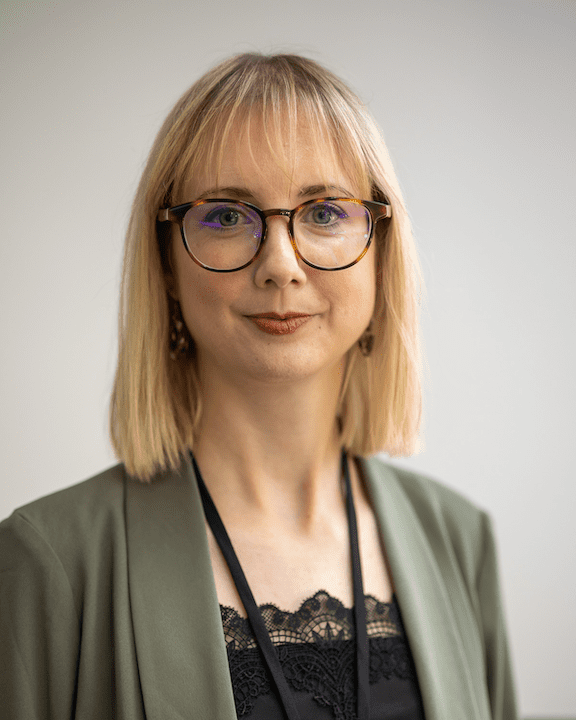
Ellie Duncan, freelance fintech journalist and podcast host
Career & Background
- Let’s start with your career journey. What were the key moments or turning points that led you to where you are today?
A major turning point for me in my career as a financial journalist came when I worked at the Financial Times Group on one of their specialist titles. Up until then, I’d written for print and online. But then I was given the opportunity to be trained up to conduct video interviews in their studio. I jumped at the chance, as I’d always wanted to try broadcasting. After that, I helped launch and regularly host and edit FTAdviser’s podcast series. And I haven’t looked back – I am the host of Settling Up with GoCardless, and the Open Banking Expo Unplugged podcast series, as well as the Live Lounge series for Open Banking Expo. I still enjoy the writing process, but I really enjoy getting across stories with a mic in hand! - How did you first get into Fintech? What drew you in, and how has the industry evolved since then?
I was working at a content agency, writing for a variety of titles and with editorial and corporate clients on anything from investments, to pensions and wealth management. Then, I was asked to work with Open Banking Expo, helping to build out their content, including their news, features and podcast offering. Needless to say, it was the first time I’d heard of ‘open banking’ and I quickly had to get to grips with it.
I think what drew me in is that this is a fast-changing sector that has consumers and the customer experience at its heart. This idea that consumers own and can share their financial data with a view to improving the products and services they use has kept me interested.
- Looking back, is there a piece of advice you wish you’d received earlier in your career?
Not a piece of advice as such, but I could see that journalism was coming under increasing pressure. Many of the B2B titles I’ve worked at over the years closed or megerd, as ad revenue declined. I could see that audiences were consuming information in a variety of formats and across different platforms and I didn’t want to be left behind or pigeonholed. I made a conscious decision to expand my skillset to encompass broadcast journalism, which I think has stood me in good stead, particularly since going freelance a year ago.
Industry Insights
- What do you see as the biggest opportunities and challenges in the market?
There’s a huge opportunity to create a more inclusive financial system. Financial services should be for the many, not the few – having access to a free bank account is a basic human right. The use of consumer-permissioned data sharing – open banking/open finance – is improving access to financial services in countries globally. However, there are still barriers around consumer education, inertia and trust. These are overcome by creating customer experiences that are both secure and intuitive, thereby encouraging mass adoption.
I think one of the biggest challenges – and this is one for both industry and government – is around a digital ID. The messaging in the past has been clumsy and ill thought out, when it should be positive and reassuring. With fraud levels where they are, a nationwide digital ID scheme has the potential to provide far more security and privacy in payments, banking and beyond. - How do you see regulation and compliance shaping the future of Fintech?
I think regulation plays an important role in setting guardrails in fintech that allow the industry to innovate within those. The Financial Conduct Authority has also embraced sandboxes to encourage experimentation and to offer a real test bed for new and exciting technologies. This is happening now with open finance in the UK and it means that use cases can then rapidly come to market, having been fully tested in a sandbox environment.
- What role do partnerships and ecosystems play in driving innovation in Fintech?
Partnerships and ecosystems are critical in fintech, which thrives on collaboration. We’ve seen this with bank and fintech partnerships – that combination of customer data and distribution reach, with agility and technical capability has spawned some inspiring and successful use cases.
- What’s happening in the world right now that genuinely excites you about what’s next?
The rollout of further smart data schemes, which go beyond banking data and, indeed, beyond financial services to incorporate other sectors, ranging from property to transport, and retail to energy. Earlier this year, the UK government set out its plan for more than 20 interoperable smart data schemes by 2035, which is ambitious. At the moment, there’s a focus on streamlining the homebuying process, which is known for being cumbersome and inefficient. Incorporate data sharing into the property sector and it could be transformative. The same goes for other sectors.
Quickfire Round
- Fintech company to watch? Any that are solving a genuine problem to make finance fairer.
- Most overused Fintech buzzword? Seamless
- Favourite news source? I regularly read The Guardian for world news and lifestyle features. For industry news, I read a variety of titles, including Fintech Finance News, The Paypers, Finextra and Open Conversations by Marie Walker.
- Favourite TV show? Taskmaster
- Favourite drink? Tea – it’s my fuel. I drink several mugs a day. Out of office hours, I favour an Aperol spritz.
Final Thoughts What’s one piece of advice you’d give to Fintech founders or leaders today?
Build a truly diverse – in every sense of the word – workforce. Your product or solution will benefit from that diversity of thought at every level of your organisation.