Report
Visibility in the
Synthetic Age
Time for a new game plan
By Hotwire and House of Beautiful Business · November 2026 · 18 min read
Visibility used to be simpler
For a long time, visibility was one of the simplest ideas in business: if people could see you, they could consider you. And the more people you reached, the better your chances were of being known, remembered, and chosen.
Much of what communications and marketing departments did was built around that logic: run campaigns, earn coverage, climb search rankings, attract followers; measure impressions, traffic, reach, and engagement. These were never perfect measures of business impact, but they gave organizations a reasonable sense of how visible they were.
Now that logic is breaking down. AI makes it dramatically easier—for everyone—to produce more content, reach more audiences, and generate more signals. Yet appearing more often tells us less about whether an organization is actually being noticed, remembered, trusted, or acted on. A brand can appear everywhere without being understood, be found by an AI assistant without being chosen, or become part of conversations it cannot see.
Visibility isn’t becoming less important. It’s becoming harder to read. In the Synthetic Age, exposure is only the starting point now. The real question is whether you can be found, understood, trusted, and carried into the decisions that matter.

This report explores what’s changing, the paradoxes organizations must navigate, and the practical ways they can build visibility that does more than make them seen.

Three new shifts are affecting visibility
Know what you’re working with
1. We’re making LOTS of content…
… but abundant content generation goes hand in hand with a scarcity of attention, time, and commitment from those who are targeted to consume it.
The amount of content in circulation has been rising for years. In 2012, around 60 hours of video were uploaded to YouTube every minute. By 2020, that had risen to more than 500 hours per minute. AI is now pushing that abundance even further, making it dramatically easier for organizations to create more versions, more often, for more audiences.
But the ability to produce more doesn’t mean people have more attention to give. As content becomes abundant, the scarce part shifts to what people are willing to spend their time on, engage with, and make room for in their lives. So it’s not really about what an organization can produce, but what people find and are willing to let into their lives.
49.9% of sampled articles were classified as mostly AI-generated
— Graphite, Q1 2026
72.1% rise in TikTok video uploads, year over year
— Metricool, 2026
31.3% fall in average views per TikTok video
— Metricool, 2026

2. We’re listening more to people…
… but attention to the person does not automatically build lasting recognition for the organization.
Organizations have always relied on recognizable people to carry ideas. But over the past decade and a half, those people have increasingly become media channels in their own right. In 2010, only 36% of CEOs at the world’s top companies were socially active. By 2015, that had more than doubled to 80%. And today, organizations increasingly rely on executives, employees, and creators to reach audiences that institutional voices often struggle to engage.
The challenge is what happens to that attention. In B2B, it’s often a question of permanence: audiences, reputations, and relationships accumulate around individual accounts, while the people behind those accounts may eventually move on. In B2C, it’s often a question of attribution: creators and personalities can make branded content dramatically easier to notice, but attention to the person doesn’t automatically become memory or value for the brand.
23% rise in CEO postings on LinkedIn in a single year
— Financial Times, 2024
252% higher click-through rates for Thought Leader Ads
— LinkedIn, 2025
4 in 5 sitting CEOs expect to leave their role within five years
— Spencer Stuart, 2025
Only 6% of creator assets combine strong engagement with strong brand-building potential
— Kantar, 2025

3. AI is becoming a broker…
… but there’s no single rulebook for being visible to AI.
Until recently, digital discovery usually led people toward a source: a website, a search result, an analyst, a review, or a peer. AI increasingly sits in between, reading those sources, comparing the options, and presenting an answer before the customer ever reaches the organization directly.
But this new intermediary doesn’t work the same way everywhere. Which sources an AI system draws on depends on the engine, category, question, and user. Visibility therefore becomes less predictable, less observable, and less controllable. A finding from one market or engine may not tell you much about another. The practical lesson is to check which sources matter for your buyers, rather than assume one AI-search playbook works everywhere.
94% of B2B buyers use AI during their buying process
— Forrester, 2026
40% of B2B commercial leaders were expected to establish dedicated generative-search teams by 2027
— Gartner, 2025
Over 65% of Google AI Overview sources in McKinsey’s consumer goods and financial services analysis came from publishers, user-generated content, and affiliate sites
— McKinsey, 2025
70.74% of citations in Hotwire’s filtered B2B live-retrieval analysis came from corporate websites collectively, including competitors’ sites—not necessarily the brand being searched for
— Hotwire, State of AI Search in B2B, 2026
7.29% vs. 0.02% of citations came from social sources in Google AI Overviews versus ChatGPT in Hotwire’s B2B live-retrieval analysis
— Hotwire, State of AI Search in B2B, 2026

An even bigger challenge:
Some of the visibility that shapes decisions now happens in places organizations cannot see, measure, or even know they are part of.
Buying decisions increasingly take shape across more people, more channels, and more private or machine-mediated environments than any organization can fully observe. A conversation with an AI assistant. A recommendation in a private Slack group. A link forwarded in a message. An internal discussion involving people the seller will never meet.
Each may influence what gets considered, trusted, or chosen, without leaving a signal the organization can reliably measure. The challenge isn’t simply reaching more people. It’s understanding and influencing decisions that increasingly take shape beyond your field of view.
13 internal stakeholders + 9 external influencers
— Forrester, The State of Business Buying, 2026
10 buying channels on average
— McKinsey, 2026 Global B2B Pulse
61% of the buying journey happens before first vendor contact
— 6sense, 2025
Roughly 80% of deals go to the vendor favored before first contact
— 6sense, 2025
The Visibility Paradoxes
The paradoxes describe the new conditions of visibility in the Synthetic Age. As we navigate them and try to make different forms of visibility work together, certain patterns emerge. We call these Visibility Plays.
Generated × Lived
A marketing team can produce dozens of versions of the same idea, distribute them, and generate dozens more. When the British Council ran its “Global English” campaign, it turned about ten master templates into more than a thousand localized assets across seven languages, cutting production costs by 70%. A brand can now create more images, messages, and variations than it could have afforded only a few years ago.
This is Generated Visibility. It’s appearing more often, in more places, and in more forms. And everyone else can do it too.
So as production becomes abundant, the scarce part shifts to what other people are willing to put into the relationship. Things like time, sustained attention, participation, creativity, reputation, commitment, or belonging.
Good storytelling can help earn that investment. A compelling narrative gives people a reason to care about an organization and can influence what they believe, remember, and do.
Now for Lived Visibility.
Lived visibility is about investment, not provenance: even a fictional character can become deeply lived. Think collected, remixed, made part of a shared culture. One example is Lofi Girl, the animated study companion whose (human-made) music millions have made part of their daily routines. What defines it is what people invest, not whether the character is real.
Generated visibility creates presence. Lived visibility begins when people spend time, return, contribute, adapt, recommend, or bring the organization into their own work.
So, two questions:
Can what the organization makes earn real investment from people?
Can that investment, in turn, shape what it makes next?
Your Move:
Look at the balance. For everything your team produces, ask how much of it people actually invest in, versus just receive. If almost all your output is generated and almost none of it is lived, that’s the gap you’ll need to close.
Person × Institution

The most visible voice for an organization is now a person: a founder, CEO, employee, practitioner, creator, or ambassador. People publish from inside relationships, rather than from a more institutional channel. They can develop a recognizable voice, hold a specific opinion, be challenged, and build a history.
Because as polished organizational content becomes easier to produce, a person choosing to say something (and attaching their name to it) carries more credibility.
That is Person Visibility: it’s relational, expressive, and portable.
But the same conditions that favor individuals also make visibility easier to detach from the institution behind them.
Sometimes the person belongs to the organization. But they can leave, and the audience could follow. A founder can become more famous than the company. Visibility accumulates around an individual while surprisingly little of its meaning stays behind.
Sometimes the relationship is external. A creator can command enormous attention for a piece of branded content without that attention becoming memory, preference, or value for the brand itself.
Two examples with the same question: What does the institution accumulate?
The pull toward people is strong. BetterMe is a wellness company with millions of followers of its own. Even so, its founder Victoria Repa built her personal following to over five million people in about three years. As she told Inc.: every change in how people find information “moved where trust lives.” And one could say that trust is gathering around her, not the company.
A football club brings this concept even more to life. In sports, it’s the players who are the stars. They score the goals and dominate the conversations. But part of what makes those moments matter is the shirt they wear and the history that’s threaded into it. When players leave, a club remains. When new players arrive, they play within the story that existed before them.
Organizations can work this way too. It goes beyond executive visibility, employee advocacy, or influencer marketing.
A weak relationship just borrows a person’s audience. A strong one gives them something of their own to stand for: a point of view, a method, a community. But the tie to the company stays clear. So when people follow the person, they also connect to the organization, and that’s something it gets to keep.
So, two questions:
Can what the organization makes earn real investment from people?
Can that investment, in turn, shape what it makes next?
Your Move:
Look at who your visibility is gathering around, and ask what the company gains from it, not just the person. The strongest move is to give the people who carry your brand something of the institution’s to stand for (a point of view, a method, a community) while keeping the tie back to the company clear. Then the audience they build connects to more than just them, and the company grows with them.
Machine × Human
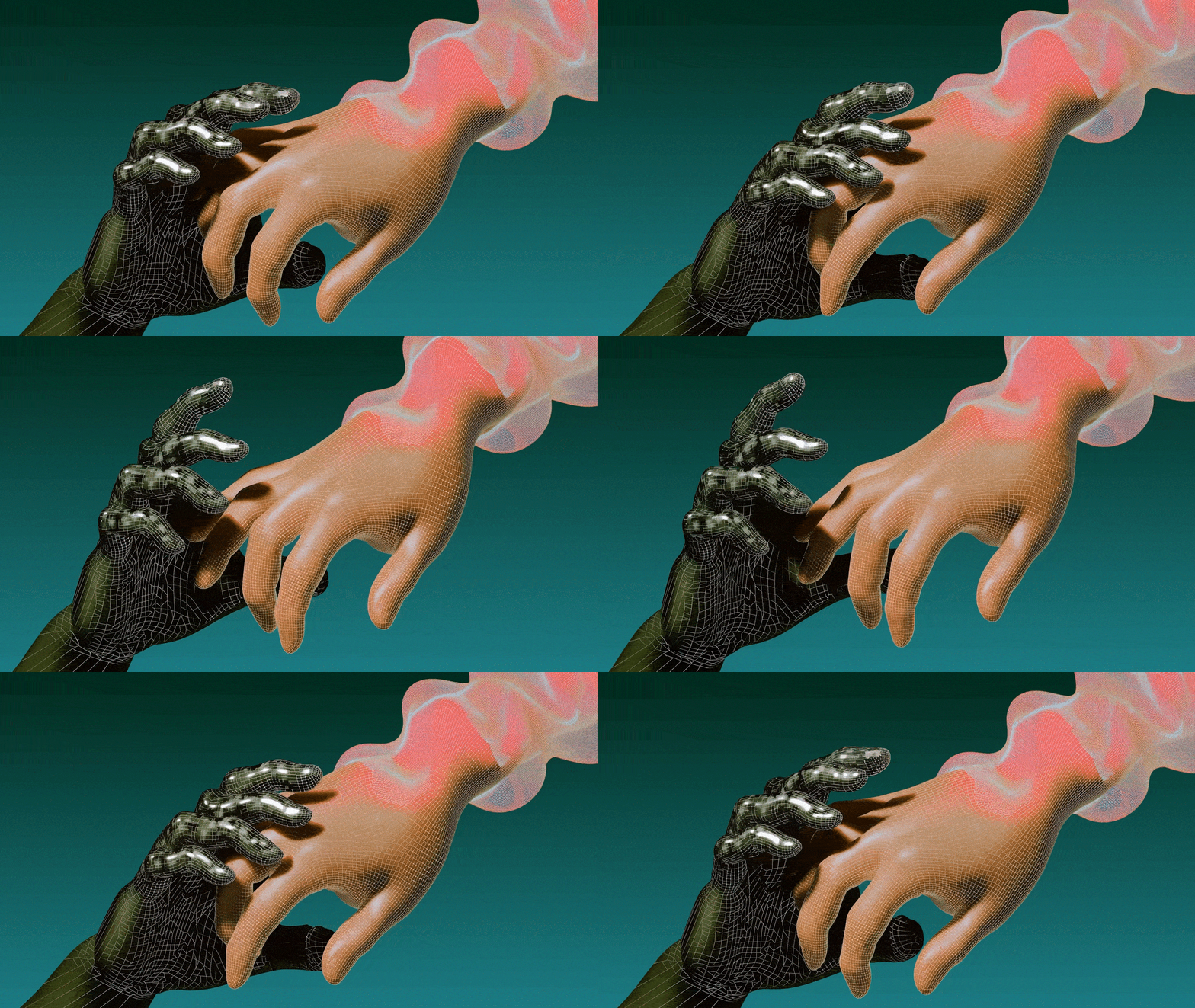
It often goes like this:
Procurement staff need to compare three vendors. They ask an assistant. Seconds later, they have a list of capabilities, strengths, weaknesses, pricing, likely fit, and a suggested shortlist. Without ever visiting a vendor website. This isn’t hypothetical: Forrester finds 94% of business buyers now use AI during buying. A company can now be found, compared, and turned down before it ever gets to speak for itself.
That’s Machine Visibility.
Today’s organizations need to be legible to machines. A system has to be able to find them, tell them apart, and describe them accurately. Hotwire’s State of AI Search in B2B corpus shows machines drawing heavily on material that answers specific questions: documentation, clear facts, explanatory depth, standards, and checkable evidence.
But machines also compress information. Three companies become three summaries, lined up side by side. Much of what sets a company apart—its tone, its story, the experience of dealing with it—can get lost along the way.
So once machines can explain what you are, what makes anyone care that it’s actually you?
That’s where Human Visibility comes in.
Think of the reputation, trust, and familiarity people build with a company over time. Maybe they’ve experienced its work, heard good things from a colleague, or followed someone who represents it. These impressions can shape a decision long before anyone starts comparing vendors.
Sometimes that means a buyer asks an AI assistant about a company by name. Other times, the assistant introduces an unfamiliar company, and something in its answer catches the buyer’s interest. Perhaps it’s a distinctive approach, a strong reputation, or research the company is known for. The buyer might explore further, talk to someone they trust, or remember the name for later.
And what people say and think about a company can also influence what machines find. A reputation built over years may show up in recommendations, independent sources, and recognizable ideas that AI systems draw upon.
Of course, none of this is guaranteed. An assistant might use your research to explain a topic, then recommend your competitor. Or someone might specifically ask for your company even though the AI hadn’t suggested it.
So the challenge goes both ways:
Can we make our company easy for machines to find, and build the kind of reputation that makes people want to choose us?
Your Move:
Try asking an AI assistant the questions your potential customers would ask. Do you show up? How are you described? Would someone understand what makes you different?
Now think about what people actually know and value about your company. Does any of that come through in the answers? If not, what could you do to change that?
Make your facts, expertise, and evidence easy for machines to find. And double down on building the relationships, experiences, and reputation that make people remember you and ask for you by name. Ideally, each should help the other.
These questions are also the starting point for Hotwire’s work on AI visibility.
Private × Shared

Someone uses an idea from your company’s research in a meeting you’re not in. Nobody opens the original article. Nobody explains the idea. They don’t need to. The conversation just keeps going, using your idea as if it had always been there.
Something has traveled without you.
A tip gets passed along in WhatsApp. An idea becomes one line in a Slack thread. A deck becomes a screenshot. A whole framework shrinks to two words. Someone repeats a thing they heard from someone who heard it somewhere else.
That’s Private Visibility. Your organization’s ideas and work moving through places you can’t see, enter, or measure.
Traveling changes what your idea becomes. Details fall away. Your name often drops off. What survives is whatever is easy to pass on without explaining. This can be a phrase, an image, a number, even a story. It loses the full picture but gets easier to communicate. And once the same idea keeps working in room after room, people start to recognize it before anyone has the chance to explain it.
Now it’s not just moving privately. It’s Shared Visibility, and shared doesn’t have to mean everyone.
In a fragmented world, one company is unlikely to become the name everyone reaches for. But it can still become that name inside one profession, one community, or even one market. An idea can travel through a small world and become part of how that world talks.
So the two sides depend on each other. To spread privately, an idea has to be small enough to carry without its backstory. And the more it gets repeated across those private spaces, the more shared it becomes. But here’s the catch: once an idea is truly shared, your name may not travel with it. That’s the power and the risk.
So the question is:
Can we make ideas people want to pass on, and make sure our name travels with them?
Your Move:
Make your ideas easy to carry, and build your identity into them from the start. Give people a phrase, a number, or a framework small enough to repeat without a whole backstory. Name it in a way that points back to you (more on that further down) so even the short version carries a trace of where it came from. You can’t control where an idea travels, but you can shape how recognizable you are when it lands.

The Visibility Plays
A Play isn’t a tactic tied to one channel, and it doesn’t “solve” a paradox. It’s a concrete, repeatable method of making one kind of visibility create value for another.
A Play isn’t a tactic tied to one channel, and it doesn’t “solve” a paradox. It’s a concrete, repeatable method of making one kind of visibility create value for another.
The following six Plays aren’t an exhaustive playbook, but they’re strong patterns we’ve identified through our research.






The Ultimate Visibility Paradox
Across all of this, a bigger realization emerges.
In an age when content can be generated and distributed almost without limit, much of what makes visibility valuable remains hidden from view.
It’s the trust built through relationships. The meaning people attach to shared experiences. The knowledge that comes from being somewhere no one else has been. The reputation accumulated over years. The ideas circulating in conversations you’ll never hear.
These things are not necessarily impossible to observe or measure. But they cannot simply be manufactured at the push of a button. And they rarely reveal their value in the instant they are created.
Perhaps, then, the Visibility Plays are also Invisibility Plays. Ways of investing in the less visible foundations of recognition, influence, and preference.
This is the ultimate paradox of visibility in the Synthetic Age: the easier it becomes to be seen, the more valuable the invisible becomes.
What’s Worth Measuring
And that leaves us with a challenge.
If the things that make visibility valuable are often the hardest to see, how do we know whether we’re successful in building them?
That’s where our next research begins.
What’s Worth Measuring? will explore what evidence helps us recognize valuable visibility across its different forms. We’ll examine where today’s measures remain useful, what they miss, and what else deserves attention.
We’ll also learn from the people building visibility. What are they trying? How do they know whether it’s working? What are they seeing that doesn’t show up in the numbers?
Because if we need to think differently about visibility in the Synthetic Age, we also need to rethink what success looks like, and how we know when we’re achieving it.
Want to explore what this means for your organization and contribute to the next phase of the research?
Reach out for a free session with an AI visibility advisor.

Visibility in the Age of AI
Explore our Visibility Hub.